
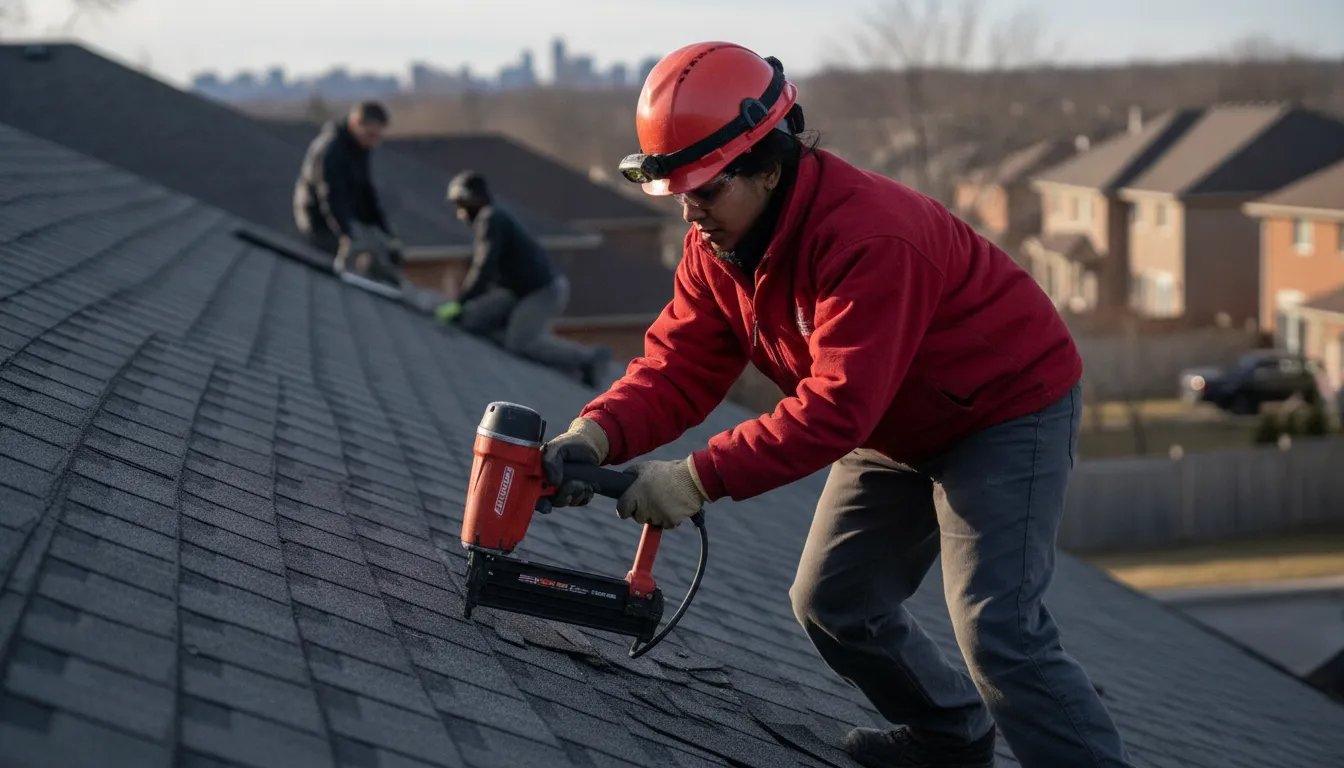
Leak repair that starts by finding where the water actually got in
A ceiling stain rarely sits above its cause. We trace the path before we patch anything, so the fix actually holds.
Email Us for a Free EstimateWhy Toronto leaks are often misdiagnosed
Water travels along rafters and sheathing before it drips somewhere visible, which means the ceiling stain and the actual entry point are frequently in different parts of the roof entirely.
Ice damming causes leaks nowhere near the eave
Backed-up meltwater during a Toronto freeze-thaw cycle can travel well up-slope before finding a gap, showing up as a leak far from where the ice actually formed.
Flashing failures are the most common source we find
Chimneys, vent stacks, and skylight flashing degrade faster than the shingle field around them, and a patch on the shingles alone won't fix a flashing leak.
Older homes often have layered patch history
Century and postwar homes across the city sometimes carry two or three past patch attempts. We check that history rather than adding another patch on top of failed ones.
Wind-driven rain exploits gaps a still-air inspection misses
Some leaks only show up during specific wind directions off the lake. We ask about conditions during the leak, not just check the roof on a calm day.
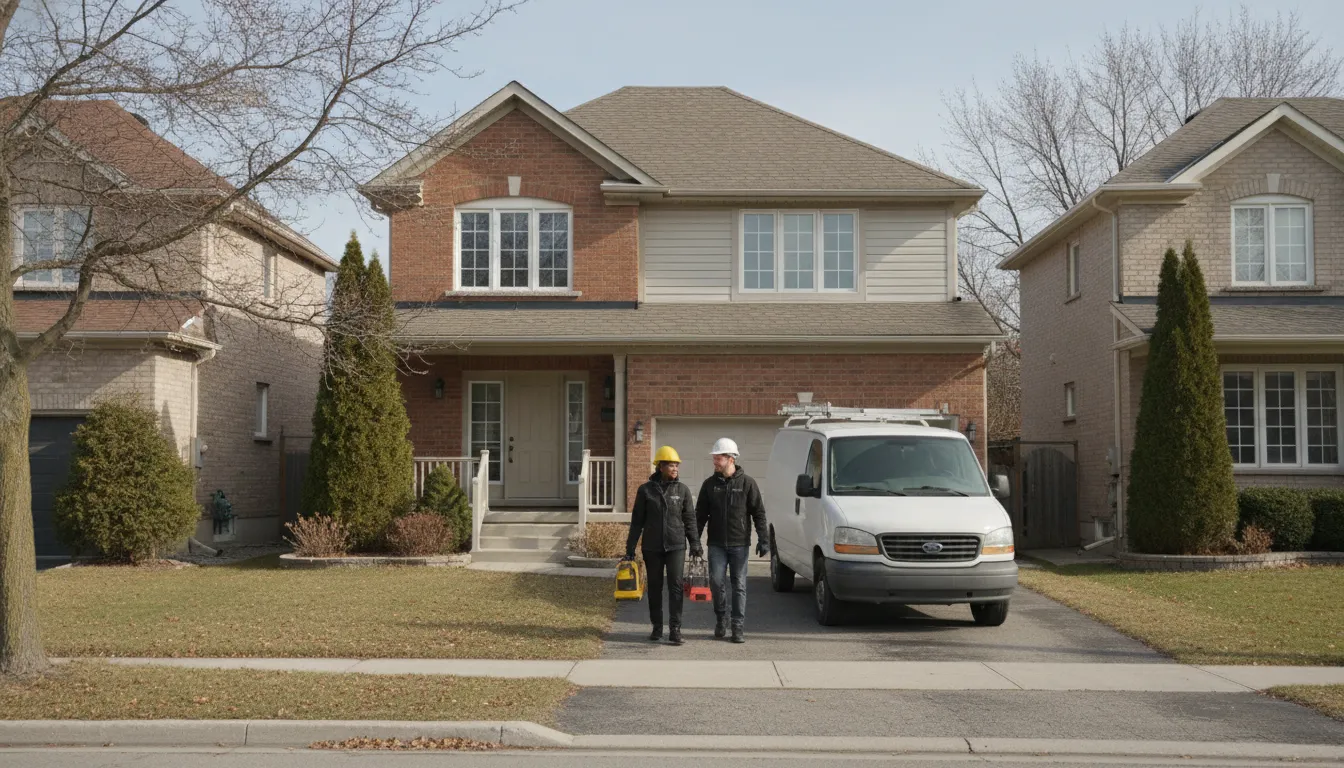
Why patch-and-hope repairs keep coming back
A common cheap fix is sealing the spot directly above the interior stain. If that's not where the water is actually entering, the leak returns after the next storm, and now there's sealant covering the real problem, making it harder for the next contractor to trace properly.
How we actually trace and fix a leak
We start from the interior stain and work backward, checking attic framing, insulation staining, and decking for the real water path. We inspect flashing and penetrations up-slope of the stain specifically, since that's the most common actual source. Once we've confirmed the entry point, we scope the repair to that location, and we'll tell you plainly if the fix is a targeted repair or if it's a sign the roof needs broader work.
How we handle a leak call
Tracing comes before patching, always.
- 1
Interior assessment
We look at the stain, its shape, and any attic access to understand water path and timing.
- 2
Exterior and flashing trace
We check up-slope flashing, penetrations, and shingle condition for the likely entry point.
- 3
Confirmed diagnosis and quote
You get a specific explanation of the source before any repair is priced or performed.
- 4
Repair and verification
We complete the fix and, where possible, check for continued moisture before closing out the job.
Why homeowners contact us for recurring leaks
We're often the second or third call after a patch job didn't hold.
We trace before we patch
Sealing the visible stain without finding the source just delays the next leak.
We check flashing first
Most leaks we find start at flashing, not the shingle field.
We respond promptly to active leaks
Active water intrusion gets prioritized over routine scheduling.
We look at prior patch history
Old repairs get factored into the diagnosis, not ignored.
We're honest about repair versus replacement
If a leak signals a bigger issue, we'll say so rather than patching it away.
We document the source we find
You'll understand what failed, in writing.
Roof leak repair questions
Why does my roof only leak during certain storms?
Wind direction changes which gaps water can exploit, and some leaks only appear with wind-driven rain off the lake from a specific direction. We ask about these conditions when diagnosing.
The stain is in one spot but you found the leak somewhere else, why?
Water travels along rafters and sheathing before dripping at a low point, so the visible stain and the entry point are often in different locations. Tracing the path is how we find the real source.
Can a leak repair wait until spring?
Active leaks are best addressed promptly regardless of season, since ongoing moisture can affect decking and insulation. We can discuss timing based on severity.
Will you just seal the spot I'm pointing at?
Not without checking first. Sealing the wrong spot gives a false sense of the problem being solved while the actual source keeps leaking.
How do I know if it's a repair or I need a new roof?
It depends on how widespread the underlying damage is. We'll tell you honestly if a targeted repair is enough or if the leak is a symptom of broader roof failure.
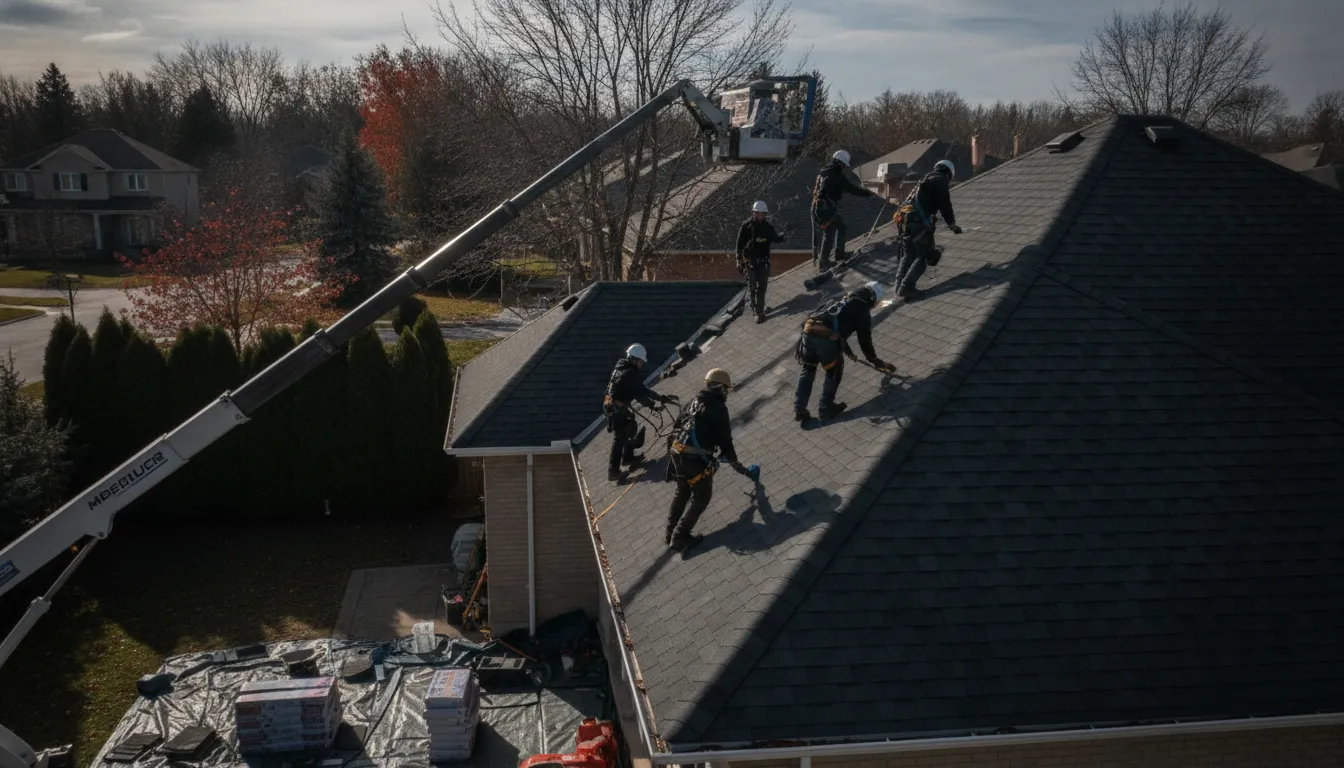
Get your leak traced to the actual source
Tell us where the stain is and when it shows up. We'll trace the path before quoting a fix.
Email Us for a Free EstimateWeather is hard on your roof — email us for a same-day inspection.
Fall roofing conditions in Toronto, ON
Fall is the critical prep window around Toronto, ON: clear gutters, reseal flashing, and fix loose shingles before freeze-thaw and snow load arrive.
Proudly Serving Toronto, ON
Local, on-time service throughout Toronto and the surrounding area.